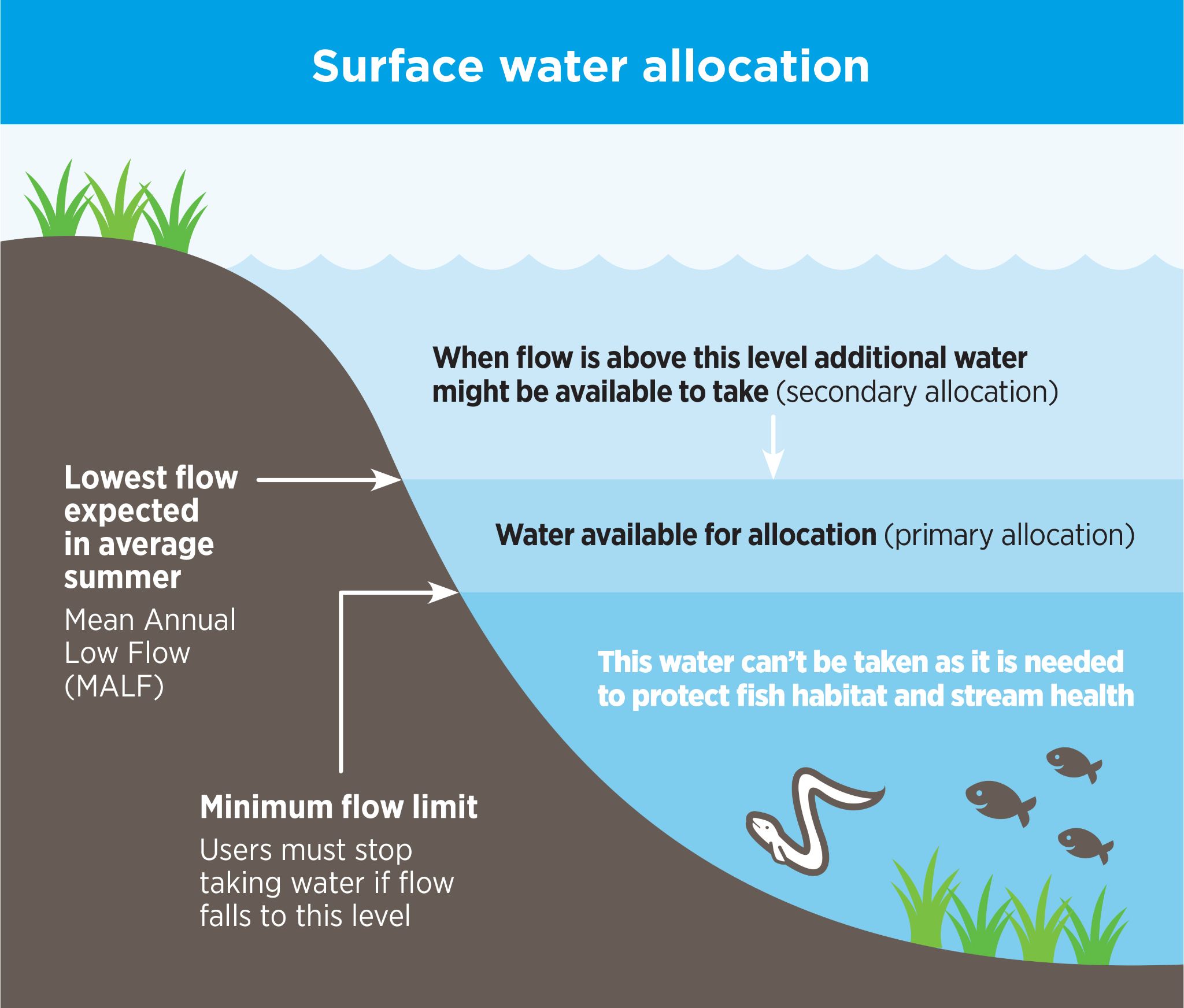
As with flood estimates (such as a 1-in-100-year flood), flows lower than MALF or Q5 7-day low flow can occur more or less frequently than expected.
We are developing a minimum flow management map that groups together streams with similar flow characteristics. This will allow us to manage the taking of water to avoid causing a breach of the minimum flow across all streams in our region based on a continuous gauging site within each group.
Maintaining ecosystem health
The default water allocation limit in the Regional Plan provides 10% of the Q5 7-day low flow to be available for allocation. This is generally considered a conservative limit and is useful where limited site-specific information is available.
Fish are often the most sensitive component of stream ecosystems, so we intend on basing future water allocation limits on maintaining healthy fish populations.
Different fish species have different habitat needs, and each stream has unique characteristics such as shape, rate of flow and depth.
Our scientists have surveyed 53 streams across the region using an international accepted modelling approach to assess how water takes affect fish populations. Using these studies, along with other information, we have developed updated assessments of how much water needs to remain in streams to retain fish habitats. These assessments better reflect individual stream characteristics and prioritise protecting fish habitat.
This information has been published and is available in our Recommended steps to set minimum flows for ecological values in Bay of Plenty waterways report and can be used to support consent applications. An indicative surface water accounting tool is also being developed that will be available online and will show:
- total water available for allocation
- how much is already allocated
- how much remains available under either:
- the default 10% Q5 7-day low flow method, or
- the newer MALF-based assessment to provide regionally consistent habitat retention for fish.
Under both approaches, allocation limits are based on the difference between:
- the minimum flow (the flow that must remain in the stream), and
- either Q5 7-day low flow or MALF 7-day low flow.